Maui is the second largest of the Hawaiian Islands. Its nickname is “The Valley Isle,” which describes its geography as a large valley between two dormant volcanoes — Haleakala in the east and Mauna Kahalawai in the west. Haleakala’s name means “House of the Sun,” and it’s the largest dormant volcano in the world at 10,023 feet high, 4,000 feet deep, and 21 miles across its crater. Mauna Kahalawai, an eroded volcano, is referred to as the West Maui Mountains.
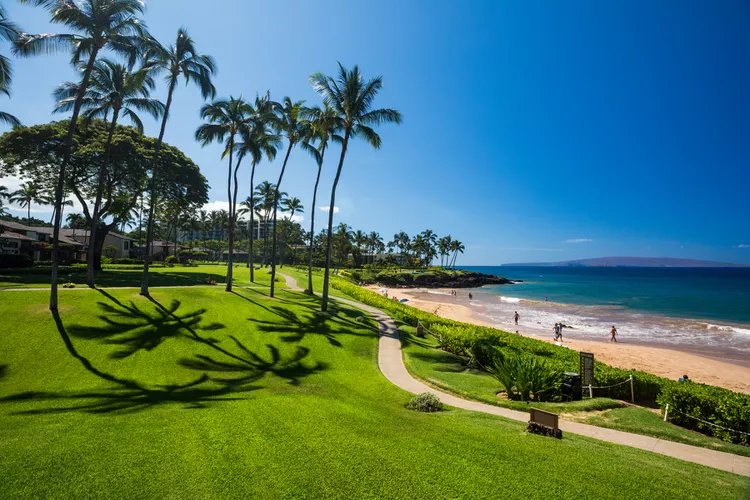
Maui is known for its beaches, with over 120 miles of shoreline and 80 beaches — more than any other island in Hawaii. Maui’s beaches vary from gentle surf to crashing waves, with fine white sand and even rare black and red sand beaches near Hana.
Kahului Airport is located in Central Maui on the northern edge of the land between Haleakala and the West Maui Mountains. Five regions define the island. West Maui is home to the resort areas of Kaanapali, Kapalua, and the town of Lahaina. The resort communities of Kihei, Wailea, and Makena are located in South Maui.
The road to Hana and Haleakala State Park are in East Maui. Upcountry is located on the higher elevations around Haleakala, where farms, dairies, and ranches take advantage of the volcanic soil and wetter weather. In Central Maui, Iao Valley State Park offers hiking trails, forests, and running streams.
Time Zone
Hawaii follows Hawaii Standard Time (GMT-10 hours), which is five hours behind Eastern Standard Time and two hours behind Pacific Standard Time. Hawaii does not observe Daylight Saving Time, so add one extra hour to the time difference during this period (March through November).
Best Time to Go
The summer season, mainly April through November, sees higher temperatures and less precipitation. June, July, and August are popular with vacationers when schools are generally out, and the weather is warm and dry.
Winter, from December through March, is cooler, but still warm and sunny although there’s a bit more rain. The weather varies across different areas of the island, and the western and southern shores are generally drier. Lahaina and Kaanapali in West Maui get around 10 inches of rain annually, compared to higher elevations that can see more than 300 inches of rain each year.
Winter is a popular time for visitors to get away from cold weather at home and enjoy Maui’s mild winter. Whale watching season from December through May, peaking from January through March, is also a great attraction during winter.
Things to Know
Haleakala is a dormant volcano, but it’s not extinct. It last erupted between 1480 and 1600, according to the USGS, and is expected to erupt again in the future. At more than 10,000 feet in elevation, its summit sometimes receives snow in winter.
Honokohau Falls plunges 1,119 feet, dropping in two tiers. The tallest waterfall on Maui and one of the highest in the world, Honokohau Falls is located in an inaccessible valley in the West Maui Mountains. A helicopter tour is the best way to see it.
 !!! Explore Journey !!!